The Number That Actually Limits What You Can Buy in Temecula Wine Country
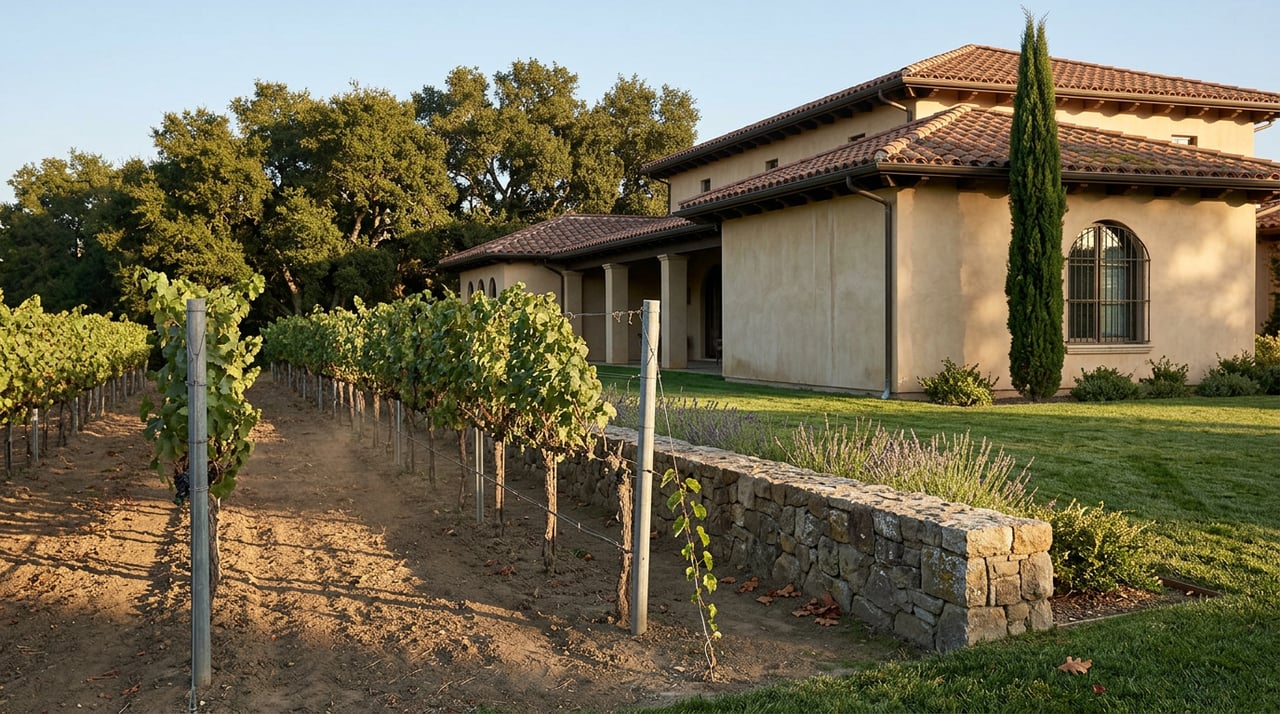
Three weeks into escrow on a De Luz property, most buyers are thinking about paint colors and moving trucks. Then the insurance quote arrives, and the math they ran at the start of the process no longer holds. It is not the well. It is not the septic tank. It is a single line item that can erase more purchasing power than moving down an entire price bracket, and it shows up after the offer is already accepted.
That line item is fire insurance, and understanding how it works before you write an offer is the difference between a Wine Country purchase that closes on schedule and one that stalls at underwriting.
Almost the entire Temecula Wine Country and De Luz corridor sits inside a Very High Fire Hazard Severity Zone under CAL FIRE's mapping. That designation means standard homeowners insurance, the kind that covers most resale homes in Murrieta or central Temecula without a second thought, is largely off the table. Since 2024, several major carriers have pulled back from or exited California's residential fire market altogether, and the practical result for Wine Country buyers is that most end up on the California FAIR Plan, the state's insurer of last resort, paired with a Difference in Conditions policy that covers what the FAIR Plan does not: liability, theft, water damage, and everything else a normal homeowners policy handles.
Combined, these two policies commonly run $6,000 to $15,000 a year for a Wine Country property, depending on structure size and coverage limits. That is not a rounding error against a mortgage payment.
An extra $800 a month in insurance costs reduces a buyer's purchasing power by roughly $96,000 at a typical 4:1 debt-to-income ratio.
Run that math against a Wine Country FAIR Plan and DIC bundle at the higher end of the range and the effect on what a buyer actually qualifies for is larger than most pre-approval letters account for. The pre-approval a buyer carries into a Wine Country showing was almost certainly built on a standard 1.25 percent insurance estimate, the default most mortgage systems use. It was not built on FAIR Plan math.
This is not a niche concern. As of March 2026, roughly 41 percent of homes in California's highest-risk fire zip codes carry a FAIR Plan policy, up from a small fraction of that a decade ago. The FAIR Plan also filed for a 35.8 percent average rate increase in October 2025, with an effective date of April 2026, so a quote written today reflects that higher rate, not whatever a neighbor locked in before the increase took hold. There is a small offset: wildfire hardening discounts of up to 16.4 percent launched in November 2025 for owners who document all twelve qualifying mitigation measures, things like Class A roofing and defensible space. A buyer touring a Wine Country listing should ask whether the seller has that documentation ready, because it can shift the insurance math meaningfully.
One more detail that catches buyers off guard: not every lender accepts a FAIR Plan plus DIC combination as sufficient proof of coverage. Portfolio lenders and credit unions tend to be more flexible than conventional Fannie Mae or Freddie Mac underwriters. Confirming this with your loan officer before the appraisal contingency expires, not after, keeps a good offer from falling apart over a paperwork mismatch nobody flagged in time.
Buyers touring both areas often assume De Luz is simply the more affordable, more rural cousin of core Wine Country. The real driver is a zoning distinction most buyers have never heard of: SP-7, the winery-rights entitlement overlay that applies to parcels along the Rancho California Road corridor but generally does not extend to De Luz.
| Core Wine Country | De Luz | |
|---|---|---|
| Entitlement | SP-7 winery-rights overlay | County A-1, no SP-7 |
| Typical price relationship | Baseline | 20 to 35 percent below core Wine Country, as of early 2026 |
| HOA presence | Varies by tract | Largely absent on most parcels |
| Water and sewer | Mix of private well and expanding district sewer service | Almost entirely private well and septic |
| Fire zone | Very High Fire Hazard Severity Zone on most parcels | Very High Fire Hazard Severity Zone on most parcels |
SP-7 is what lets a landowner pursue winery operations, tasting rooms, and the commercial infrastructure that supports them. It is a use right tied to the parcel, not a reflection of soil quality or view. A De Luz property can have larger acreage and a better price per acre and still lack the entitlement that makes core Wine Country land command a premium. For a buyer who has no interest in operating a winery, that gap is simply value left on the table by the market. For a buyer who does, it is the whole reason to pay more for the address.
Fire risk, notably, does not track with the price gap. Both areas carry the same Very High Fire Hazard Severity Zone designation, so the insurance math above applies whether the buyer lands on Rancho California Road or out toward De Luz Road.
A rural Wine Country transaction typically runs 35 to 45 days from contract to close, about 5 to 10 days longer than a standard suburban Inland Empire sale. That extra week or so is not delay for its own sake. It reflects three things that a suburban tract-home purchase never has to schedule around:
Add permit history research on any existing structures, since unpermitted additions are more common on rural parcels than on tract homes, and the extended timeline makes sense. It is not that Wine Country transactions are harder to close. It is that they have more independent systems to verify, and each one runs on its own clock.
Eastern Municipal Water District has broken ground on new sewer infrastructure across Wine Country, split into a Northern Phase II project and a Southern project, funded in part through American Rescue Plan Act dollars and an EPA grant. Both are slated to finish by late 2026. The stated reason is straightforward: as wineries and restaurants have grown, some on-site septic systems have outgrown their original capacity, and expanded sewer service protects groundwater quality as the region continues to build out.
That is a real improvement, and it is worth knowing about if you are looking at a parcel near Rancho California Road, Glen Oaks Road, Warren Road, or East Benton Road, where the new lines are being installed. But it does not change the picture for most Wine Country and De Luz buyers today. Outside that specific footprint, well and septic remain the standard, and the due diligence items above still apply to nearly every rural parcel on the market this year.
The purchase price on a Wine Country listing is the number everyone compares. The number that actually decides whether you can close is the insurance quote, and it arrives late enough in the process that it can force a buyer to renegotiate financing mid-escrow if nobody priced it in advance. Pairing that with a realistic read on the SP-7 entitlement, so you are not paying a premium for use rights you will never touch, and building in the extra week or so that a well, septic, and insurance timeline requires, turns a Wine Country purchase from a gamble on paperwork into a plan you can actually execute.
Does a FAIR Plan and DIC combination satisfy my lender? Not automatically. Confirm with your specific loan officer before you remove contingencies, since conforming loan underwriters are often stricter about this than portfolio lenders or credit unions.
Do all Wine Country and De Luz properties rely on well and septic? Most do today. EMWD's new sewer lines will extend service to parcels along a few specific corridors once construction finishes in late 2026, but for now, private systems remain the standard across nearly all of the area.
Is De Luz cheaper because it is a lesser location? No. The price gap traces mainly to the SP-7 winery-rights overlay that applies in core Wine Country and generally does not extend to De Luz, not to differences in land quality or setting.
Buying in Temecula Wine Country rewards patience and the right questions asked at the right time. If you are weighing a custom or rural property in this part of Temecula and want someone who will run the insurance math, the well and septic timeline, and the entitlement check before you fall in love with a parcel, Luminescent Real Estate is here to walk through it with you. Let's illuminate your next move: book a free consultation.
Stay up to date on the latest real estate trends.
You've got questions and we can't wait to answer them.