What Murrieta's Median Home Price Doesn't Include
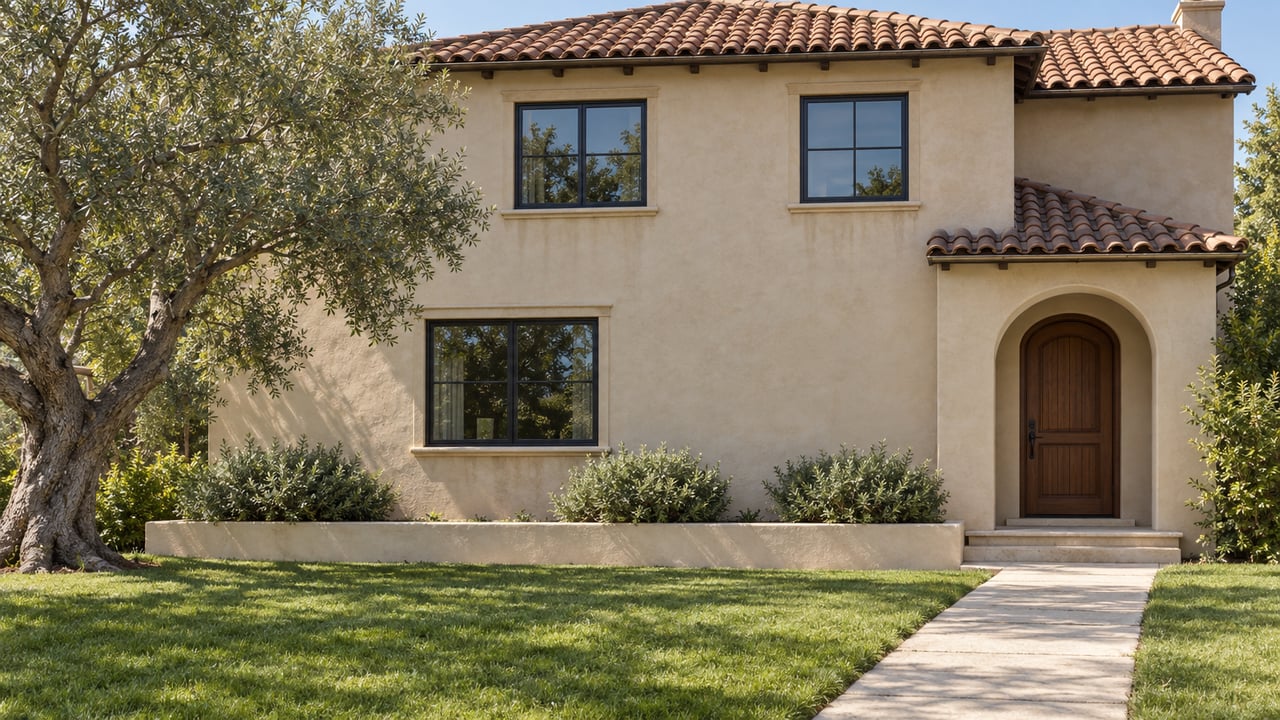
Ask anyone who has bought new construction in Murrieta in the last decade about the day they found the second number on their tax bill. It rarely comes up during the walkthrough. It rarely comes up in the listing description. It shows up later, on the preliminary title report or the county tax statement, as a line item with a name most buyers have never heard until it applies to them: a Community Facilities District charge, better known as Mello-Roos.
By then the offer is already written. The price is already agreed. And the number on that line doesn't come off the table just because nobody mentioned it earlier.
This matters more in Murrieta than in most Southern California cities, because so much of the city's housing stock was built after 1982, the year California created the financing tool that makes this charge possible in the first place. If you're comparing homes across Murrieta neighborhoods right now, the list price is only part of the number you're actually comparing.
Run a Murrieta search on any portal and you'll land on a median price. As of September 21, 2026, Murrieta's 92563 ZIP code showed 58 active listings and 12 pending sales, a pending-to-active ratio that points to a balanced market where buyers have room to compare homes rather than rush a decision. The median asking price across those active listings sat at $639,450, while the trailing six-month median for closed sales came in at $672,000, with the middle half of those sales landing between $540,000 and $755,000. Active listings had been sitting a median of 72 days.
Those numbers describe the purchase price. They say nothing about what shows up on the tax bill after closing, and in a meaningful share of Murrieta's inventory, that gap is not small.
Mello-Roos is not a fee, an HOA charge, or a hidden markup. It's a special tax, authorized under the Mello-Roos Community Facilities Act of 1982, that lets cities and counties form a Community Facilities District to fund the roads, sewers, schools, and parks a new subdivision needs before those homes even exist. The district issues bonds to pay for the infrastructure up front, and the homeowners inside the district repay those bonds over time through an annual charge that rides alongside the regular property tax bill.
That charge sits on top of the standard 1 percent base rate set by Proposition 13, and it is calculated differently than your base tax. Riverside County's own guidance on special assessments explains that Mello-Roos fees are typically set to run for the life of the bonds, usually 20 to 25 years, and appear on the tax bill as a CFD line paired with a fund number and a dollar amount. The City of Murrieta's own land-secured financing policy goes further, requiring full disclosure of the district, the maximum special tax, and the facilities being financed to every buyer, including future resale buyers, before the sale closes.
None of that makes the number optional. It makes it findable, if you know to ask for it before you're deep into escrow rather than after.
Here's where the story gets less obvious than "new construction bad, resale good."
Communities like Spencer's Crossing and Greer Ranch were built through the 2000s and 2010s and are often pitched to buyers today as a way to get newer floor plans, open kitchens, primary suites, three-car garages, without paying current new-construction prices. That pitch is often accurate on the purchase price. It says nothing about the CFD clock.
If a district's bonds were issued when a neighborhood broke ground in, say, the mid-2000s, and that district carries a 25-to-40-year term, a home in that neighborhood in 2026 could have anywhere from a handful of years left on the assessment to two more decades, depending on the exact formation date and bond structure. Meanwhile, a home in a subdivision that broke ground in the last two or three years is very likely still at the front end of a fresh 25-to-40-year term, with the full obligation still ahead of it.
Two neighborhoods that look similarly "newer" on paper, in other words, can carry very different remaining tax burdens. The floor plan doesn't tell you which one you're in. The parcel's actual CFD paperwork does.
There's a second layer to this that matters even more right now, given where Murrieta prices have been drifting.
Mello-Roos assessments are not calculated as a percentage of home value. They're typically set per parcel, per square foot, or per lot size, fixed at the time the CFD was formed. That means the dollar amount on the tax bill doesn't rise when home values climb, and just as importantly, it doesn't fall when home values soften.
That structural fact runs directly against the instinct most buyers bring into a slower market. If prices in a given Murrieta subdivision have eased over the past year, as citywide pricing broadly has, a fixed CFD charge becomes a larger share of the home's total carrying cost, not a smaller one. The list price adjusts to the market. The special tax line does not.
For a buyer comparing two homes at the same asking price, one in a district with an active CFD and one without, the true monthly gap between them can run into the hundreds of dollars, month after month, for as long as that district's bonds remain outstanding. That's not a rounding error against a mortgage payment. It's a comparison most portal searches never surface, because portals show price, not tax structure.
The fix here isn't complicated, but it does require asking for the right document at the right time, not after you've already fallen for a floor plan.
None of this requires guesswork. The disclosure exists specifically so a buyer can see it before closing, not discover it after.
Does the Mello-Roos charge ever go away? Yes, once the underlying bonds are paid off. Terms are typically set at formation and generally run in the 20-to-40-year range depending on the district, so the payoff date is fixed regardless of when you personally bought the home.
Is it included in my mortgage payment? Lenders generally count it against your monthly obligation the same way they count property tax and insurance, since it appears on the same tax bill and affects what you can actually afford to carry each month.
Can I find out before I make an offer, not just before closing? Yes. The tax bill and CFD disclosures are public information tied to the parcel, and pulling them before you write an offer, rather than waiting for escrow to surface them, is entirely doable with the address in hand.
Comparing two Murrieta homes on price alone answers half the question. The other half lives on a document most buyers never ask to see until someone hands it to them.
If you're weighing specific Murrieta neighborhoods against each other and want the actual CFD numbers pulled for the addresses you're considering before you write an offer, that's exactly the kind of groundwork Luminescent Real Estate does before a client ever sits down at the negotiating table.
Stay up to date on the latest real estate trends.


You've got questions and we can't wait to answer them.